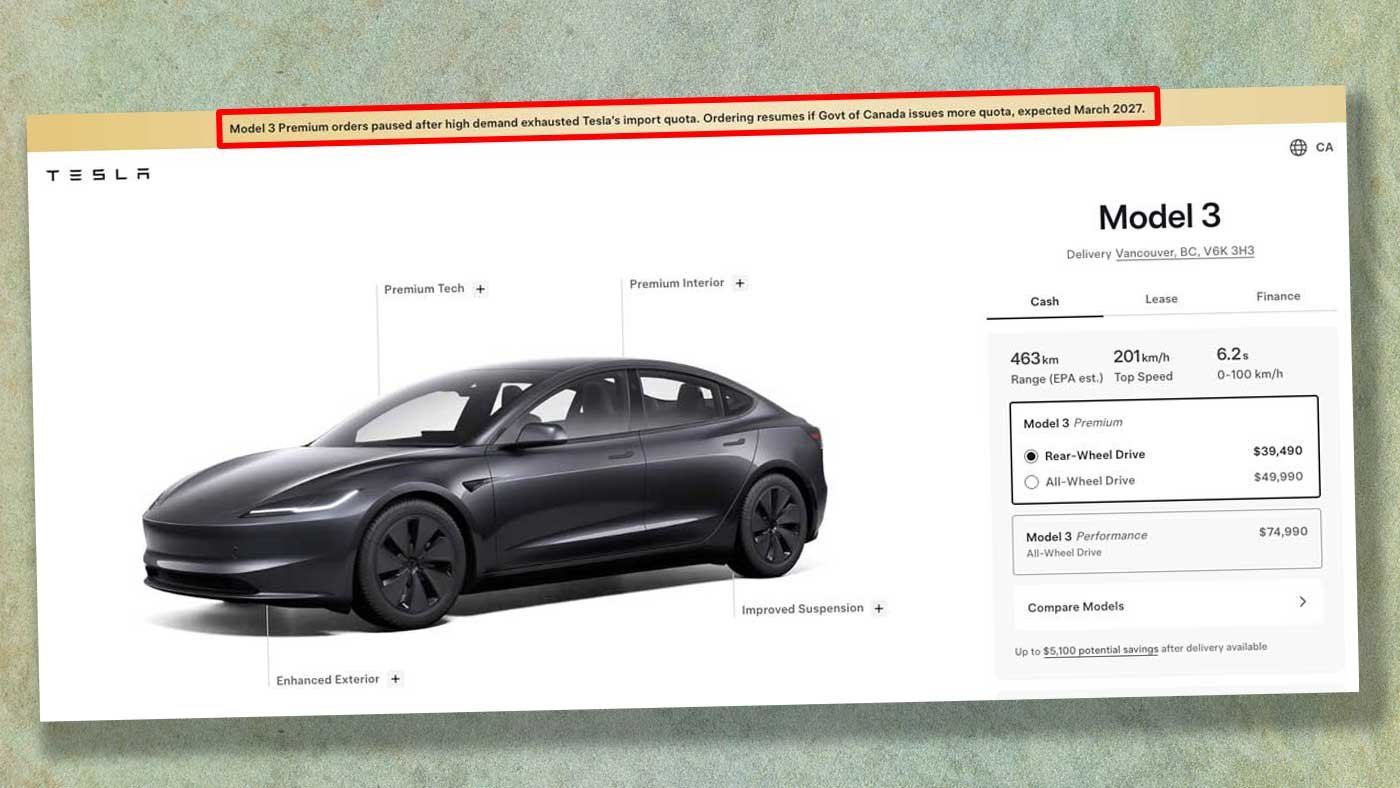
Tesla has stopped taking Canadian orders for its Shanghai-built Model 3, saying high demand exhausted its share of Canada’s low-tariff quota for Chinese-made electric vehicles. The US carmaker is believed to be the biggest user of a quota that Ottawa opened in March as part of its trade deal with Beijing.
Imports under the quota fell to 603 vehicles in September from 5,982 in July, according to Global Affairs Canada data updated on November 6 and reported by Electric Autonomy Canada. Only seven were electric cars valued at $35,000 or less. Another 443 were non-plug-in hybrid SUVs and passenger vans valued above $35,000.
Chinese-made car imports fell to 603 in September
Vehicles entering Canada each month under the 49,000-vehicle low-tariff quota, which opened March 1.
The electric cars stopped coming
Share of Chinese-made imports by type. Electric cars, including Tesla’s Model 3, were almost all of the first period. By September they were about a quarter.
Only seven of September’s electric cars were valued at $35,000 or less. Values are customs value for duty, not sticker price. Hybrids are non-plug-in hybrids valued above $35,000. Global Affairs Canada does not publish imports by company.
Canada lets up to 49,000 Chinese-made EVs a year in at a 6.1% tariff, in two six-month periods. Importers used 15,603 of the first period’s 24,500 spots, and 32,794 remained available in the second as of the latest report. Global Affairs Canada does not publish imports by company.
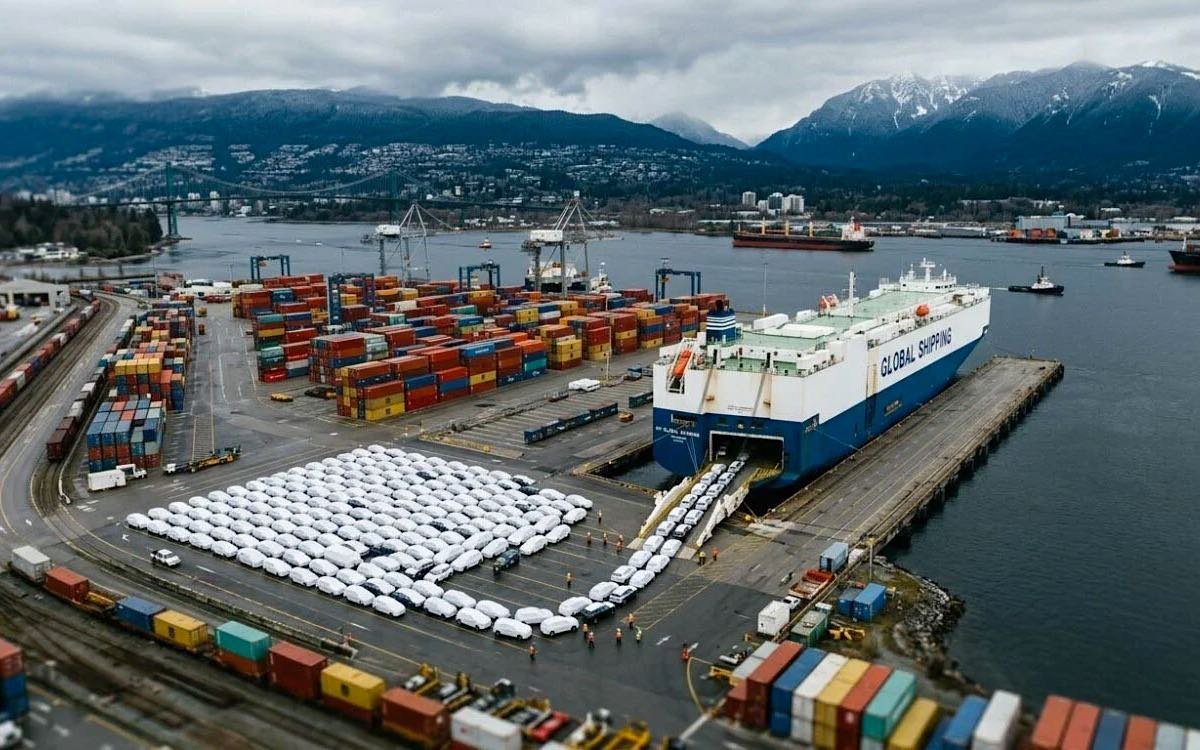
Tesla stopped taking Model 3 orders on October 12 and expects to resume when new quota is issued in March 2027. The only Model 3 still on order in Canada is the US-built Performance version. Chinese brands BYD, Geely and Dongfeng have said they plan to enter the Canadian market at the end of 2026 or early in 2027.
As of November 12, 2026, Tesla has a banner across the top of its order page for Tesla 3s declaring: “Model 3 Premium orders paused after high demand exhausted Tesla’s import quota. Ordering resumes if Govt of Canada issues more quota, expected March 2027.”
Source: Electric Autonomy Canada