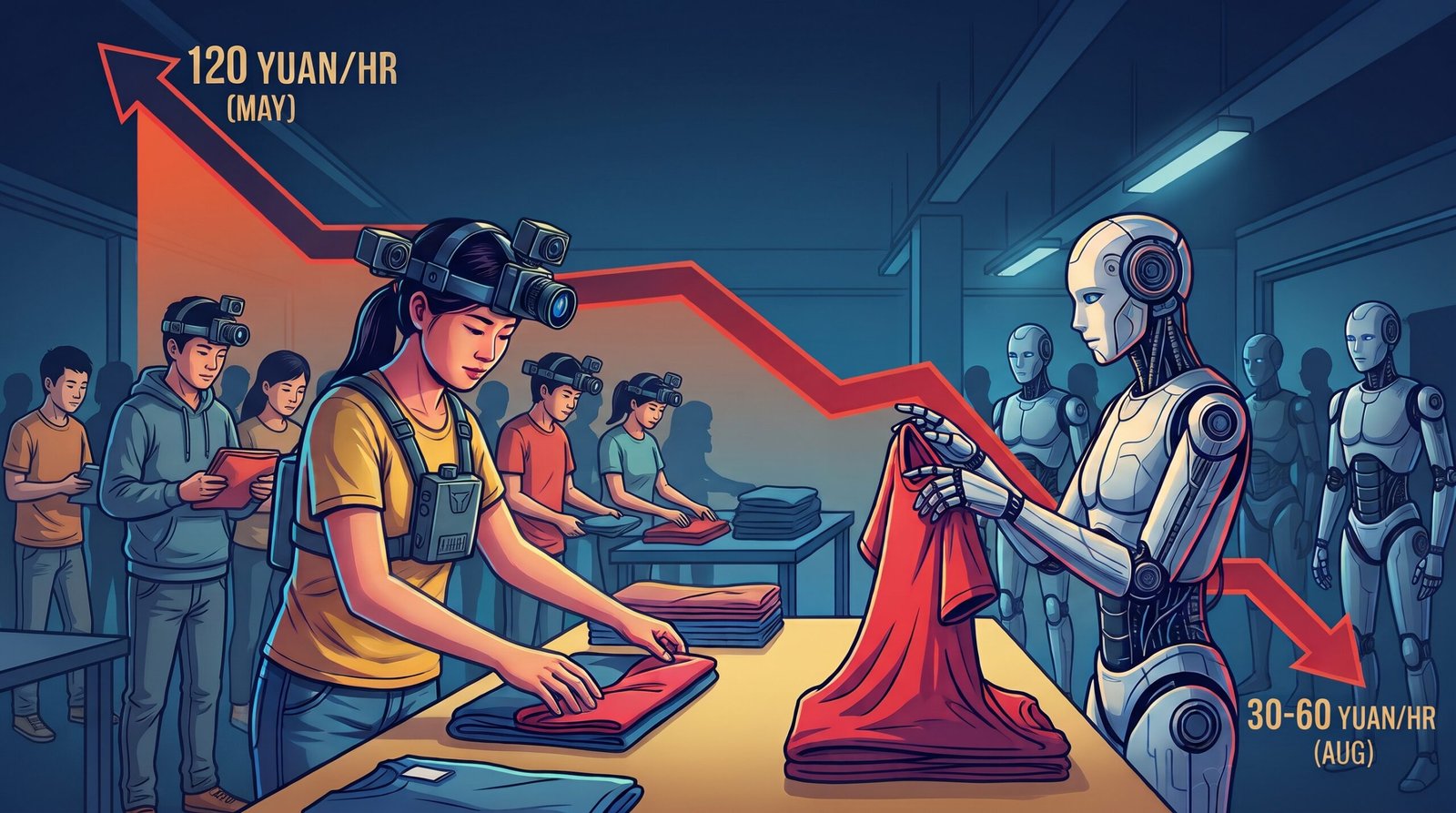
The price of an hour of first-person video for training robots has collapsed in China. A four-camera recording that sold for 120 yuan an hour in late May fetched 30 to 60 yuan by August, according to an investigation by Jiemian, a Shanghai business news site owned by the state-run Shanghai United Media Group, published on 11 November. China’s newest gig job is already in a shakeout.
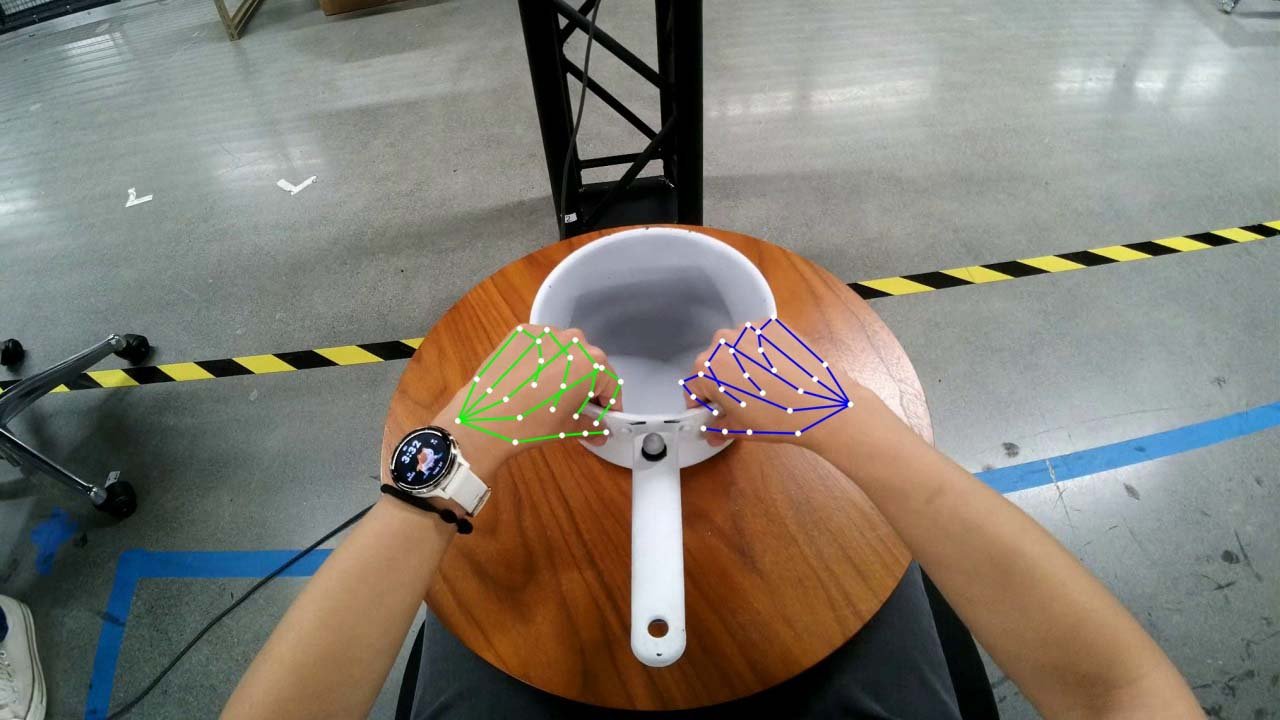
The work is simple. People strap cameras to their heads and fold laundry, stack shelves or assemble parts while the footage is recorded. Robot makers use the video to teach machines how human hands move through real rooms. The industry is betting that China’s large, cheap workforce can give its robots a data advantage that Western rivals will struggle to match.
Behind that bet, the numbers are starting to look less certain.
Money chasing data
Capital poured into China’s embodied AI sector this year. IT Juzi data cited by Jiemian counts 322 funding deals worth 93.5 billion yuan in the first half of 2026. That is about 14% of all venture funding in China and roughly five times the figure for the same period in 2025. The 25 start-ups that specialise in robot training data raised more than 17 billion yuan between them.
Investors have shifted from robot bodies to robot “brains”, and brains need data. Jiemian says Nvidia’s February papers on learning from first-person human video helped make wearable cameras the standard method. Chinese researchers think the scale required is huge. The China Academy of Information and Communications Technology says a robot model needs at least tens of millions of hours of usable data to reach a “ChatGPT moment”, 21st Century Business Herald reports.
Big platforms are building their own pipelines. JD.com plans to gather 10 million hours of robotics data over two years in Suqian, Rest of World reported in June, eventually using 100,000 employees and 500,000 outside workers. In September Gao Shaolong, chief executive of the Beijing data firm Jiyuan Zhihang, put the number of part-time collectors nationwide at nearly one million, according to a widely shared industry report.
How the chain works
Most of the footage does not come from the robot makers. Jiemian describes a chain with four links:
- Robot companies set out the data they need.
- A few dozen prime contractors, often large tech firms, divide the work by scene and hand out equipment.
- Secondary subcontractors (??) recruit collectors, mostly in cheaper inland provinces such as Henan, Ningxia and Sichuan. One operator in Hebei estimates there are about 300 such teams.
- Collectors wear the cameras and are paid by the hour of footage the client accepts.
Accepted footage is the point where the economics break down. Li Xinghao, founder of a small Hangzhou firm, was offered just over 40 yuan an hour by a prime contractor. He promised students 20 yuan an hour and planned to keep the difference. The client then rejected half of what he delivered, wiping out his margin, and he shut the business in June. A subcontractor in Henan who started in October found that only 30% of his footage was usable, which put the project into loss.
For comparison, Jiemian notes that McDonald’s in China pays 20.5 yuan an hour this year.
Rates fell as more teams joined. In 10 contractor price sheets Jiemian reviewed, footage shot on a phone or GoPro paid 20 to 30 yuan an hour, stereo-camera footage 40 to 50, and video combined with a handheld gripper up to 65. Clients sometimes ask several subcontractors to bid on the same job and pick the cheapest.
Meanwhile the end price stays high. A partner at a Henan data firm, quoted under the name Ray, puts collection and labelling at about 80 yuan an hour combined. The lowest sale price he has seen for a finished hour is 120 yuan, and most sell for 200 to 300. Cleaning and labelling take more than half of a client’s budget, so most of the value lies in processing, not in filming.
The person filming gets 20 yuan an hour. The finished footage sells for up to 300
China’s robot makers buy first-person video to train their machines. Most of the value is added after filming, and the rate for filming is falling.
Figures are yuan per hour of usable first-person footage. Contractor rates are from 10 price sheets reviewed by Jiemian. Collector’s pay and cost estimates are single cases cited by Jiemian. Ranges are plotted at their top value.
The filming rate at least halved in three months
Contractor rate for four-camera footage, yuan per hour, 2026.
August range plotted at its top value of 60 yuan.
Who absorbs the risk
The cost of uncertainty is being pushed down the chain. Robot makers keep changing their technical approaches, camera setups and acceptance standards. Every change can make footage already shot worthless, and subcontractors bear that cost.
The workers are a mix of people with few other options. In Bocheng, a resettlement community in Tai’an, Shandong, more than 5,000 households moved from eight villages have few local jobs. Since April nearly 500 residents there have been trained as collectors. One of them, 60-year-old Hou Peifang, films herself folding laundry at home. “Earning wages from housework without leaving home, and without neglecting childcare, suits people our age,” she told 21st Century Business Herald.
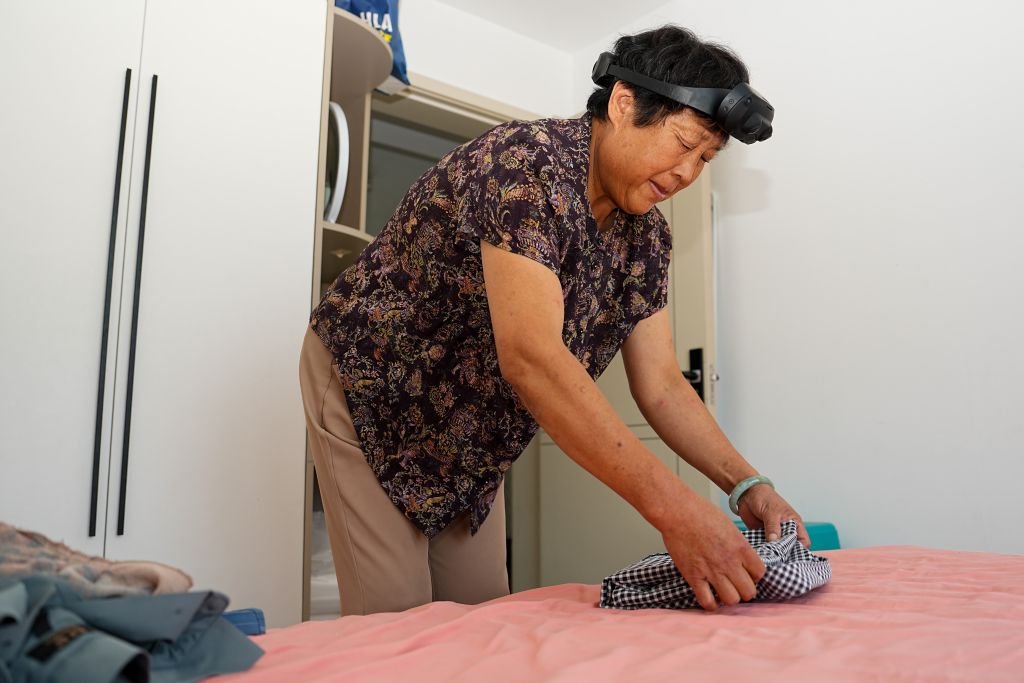
Pay varies widely depending on who organises the work. 21st Century reports that collectors who log more than three usable hours a day can make about 6,000 yuan a month. In Zhangjiajie, Hunan, a city-owned company set up in June now runs collection and sells the data. Crowdsourced first-person footage has an industry-wide usage rate of only about 20%, the paper reports.
Where China films chores to train its robots
The places named in this month’s reporting run from a Shandong resettlement town to low-cost inland provinces, where labour costs about half as much as on the coast. Tap a marker for details.
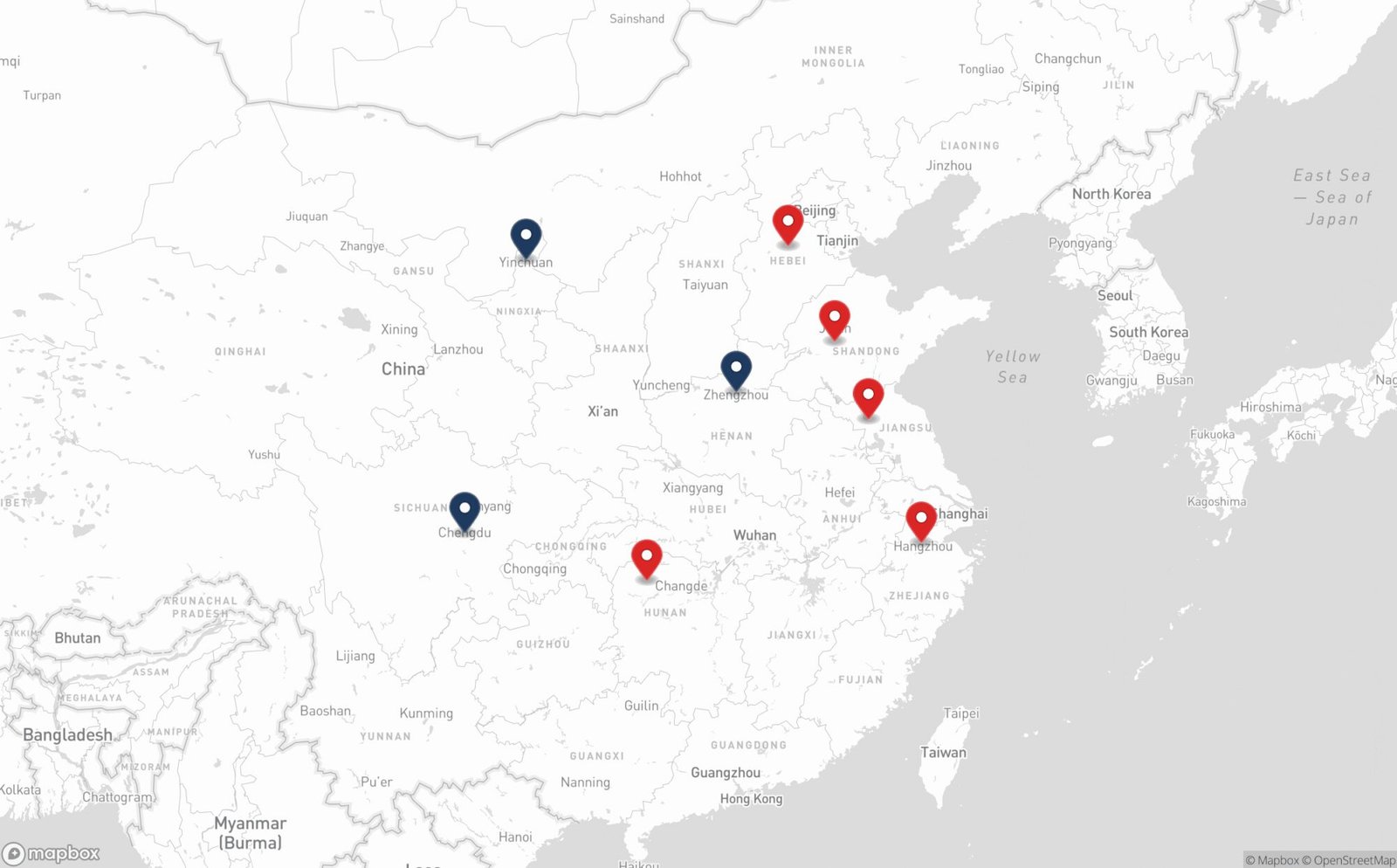
Labour in inland provinces costs about half as much as in coastal Jiangsu and Zhejiang, according to Jiemian. Province markers sit at the provincial capital and do not mark a specific site.
That gap between the footage collected and the footage used is the core problem. Industry sources told 21st Century that crowd-collected data costs a half or a third as much as data from real robots. That advantage only holds if the footage is good enough to use.
Privacy is a separate concern. 21st Century notes that cameras worn at home can capture family members and bystanders’ private conversations, and that workers may not fully understand the contracts they sign. Shen Jianfeng, a law professor at the Central University of Finance and Economics, pointed to China’s draft rules on rights for gig workers, which would limit the processing of personal information to what employment management requires.
Insiders expect the market to shrink fast. Ray predicts consolidation to about 10 large suppliers within months. Yuan Rizheng, founder of another data supplier, told Jiemian fewer than five teams in China can deliver at scale. AgiBot, one of the best-funded humanoid makers, is building its own data platform, as are others.
The state is also moving in. Beijing’s new embodied AI action plan, released the same day, names data collection as one of four areas where it will support at least 200 firms by 2028. The plan also pledges to fight “involution-style” (???) competition, the kind of price-cutting the subcontractors describe.
The data is also leaving China. Earlier this week, Beijing’s Noitom said motion-capture data it sold to Nvidia helped train the US company’s new robot-hand model (China Factor).
Not everyone thinks the effort will pay off. Xu Huazhe of Tsinghua University told Jiemian that robotics’ “ImageNet moment” may come from a widely used robot body rather than a giant dataset, and that robots should eventually learn from plain-language instructions without heavy data collection. If he is right, the cameras now recording China’s laundry may matter less than investors expect, and the small subcontractors in the middle of the chain will be the first to lose out.