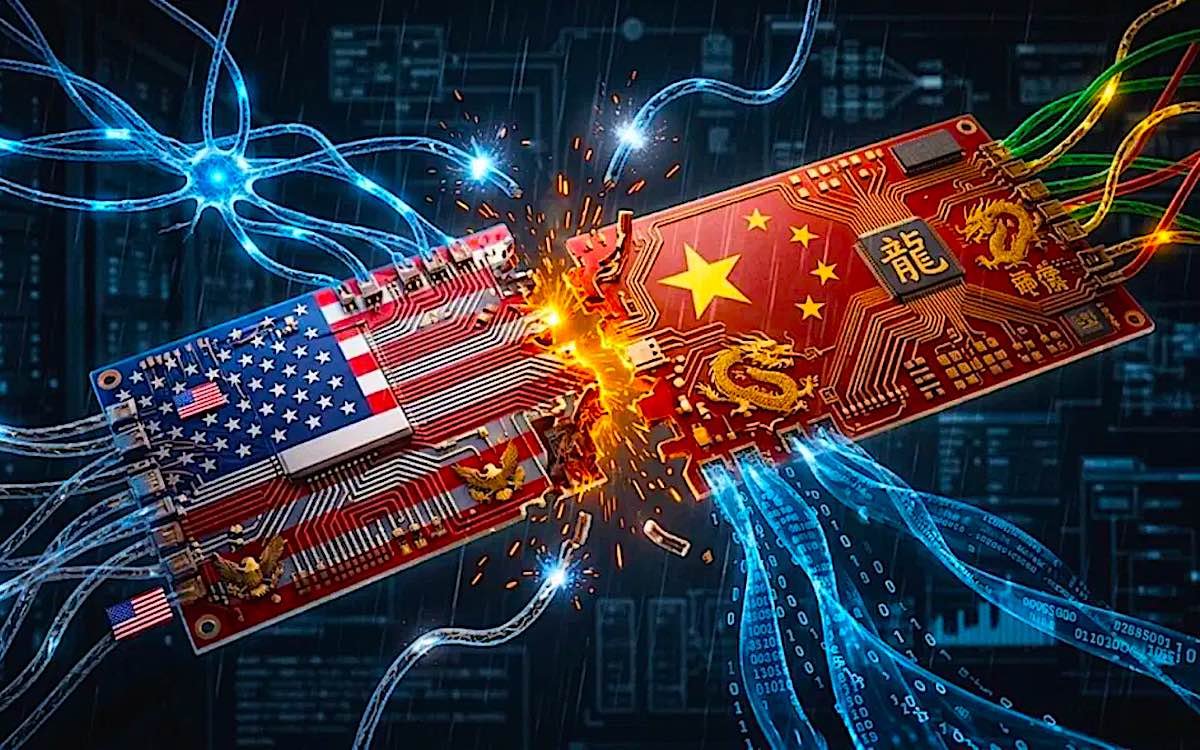
Chinese developers are using the answers of leading American AI models to train domestic rivals, and the practice has moved from university experiments into factories and internet platforms, according to a Reuters investigation published on November 17.
Reuters reviewed more than 300 Chinese academic papers, patents, corporate disclosures, recruitment notices and government documents. The review found that distillation, the technique of training a smaller model on the outputs of a larger one, has expanded into mainstream industrial use in China, as Washington tightens its curbs on the advanced chips Chinese labs need.
What Reuters found
The records describe Chinese researchers using American models to produce answers to questions, build computer code and find solutions to difficult problems. Chinese companies then develop software to automate the collection of that output, and specialist workers prepare the material for training smaller domestic models.
The documents also show that Beijing is encouraging the practice. A national AI+Manufacturing policy package published by eight Chinese government agencies in January includes guidance supporting model training, fine-tuning and distillation for industrial applications, and the cities of Shanghai and Shenzhen have encouraged techniques to reduce computing requirements. The policies reflect Beijing’s ambition to deploy smaller, cheaper AI systems across industries, Reuters reported.
The investigation was published a day after Washington said it would further restrict China’s access to advanced chips from companies like Nvidia, and days before US President Donald Trump and Chinese President Xi Jinping are expected to meet in Shenzhen on November 18-19.
From American answers to Chinese models
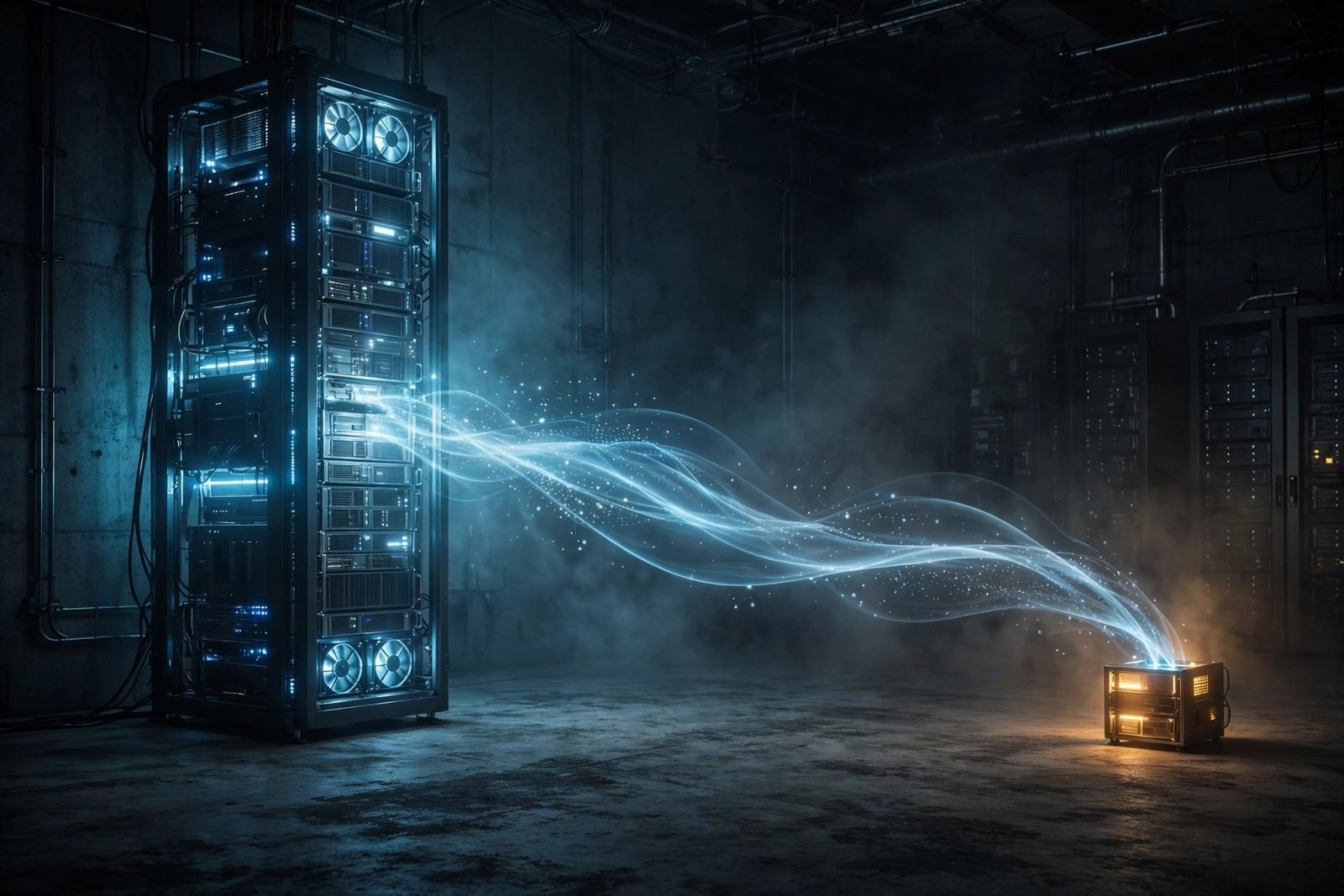
Distillation involves a powerful teacher model generating answers or demonstrating how to complete tasks, which developers use to train a smaller student system.
For Chinese developers facing constraints on computing power, the attraction is in making one expensive query do repeated work, a former Alibaba Group engineer told Reuters. An American model can generate the answer to a difficult question once, allowing a Chinese team to retain useful examples and train a local system around them.
In a November 2024 paper, Shanghai Jiao Tong University researchers described selecting about 5,000 answers from OpenAI’s o1 model, translating them using GPT-4o mini and assembling 10,750 bilingual training examples to further train Alibaba’s Qwen2.5-72B model.
The researchers also cautioned that excessive reliance on distillation could stifle original innovation, leaving developers dependent on breakthroughs made by more advanced model providers. The project showed how American model output can become reusable data.
The paper trail
Alibaba researchers described a more systematic approach in an April 2025 paper, using OpenAI’s GPT-4 and GPT-4o to generate training material in languages other than Chinese, then refining and scoring responses before training smaller Qwen models.
In a February 2026 paper, researchers from Shanghai Jiao Tong University and Chinese food-delivery company Meituan described using GPT-4o to generate plans for coordinating AI agents working together on programming problems, helping train a smaller model to organise such tasks.
Shanghai Jiao Tong University, Alibaba and Meituan did not respond to Reuters’ requests for comment.
Why it matters for the chip war
Distillation is not a shortcut to the frontier. Reuters notes that the process cannot reproduce a leading model’s full capabilities or eliminate the need for advanced computing power. What it can do is preserve selected skills in smaller systems that cost less to operate, potentially reducing reliance on American technology.
That is enough to worry Washington. China’s broadening use of distillation could undercut the effectiveness of US curbs on the sale of advanced chips to China, Reuters reported, as its developers can build AI capabilities by drawing on those of their American rivals.
On Monday, the Commerce Department’s Bureau of Industry and Security issued an interim final rule requiring licences for advanced AI chips shipped to data centres that sell large amounts of computing power to Chinese firms, and for chip shipments to five countries Washington says carry a higher-than-normal risk of diversion.
A US official familiar with the July regulatory discussions told Reuters that Washington believes industrial-scale distillation is the main reason Chinese AI models have narrowed the gap with their American rivals. Two people familiar with Chinese developers’ operations disputed that assessment, saying distillation was only one factor alongside advances in engineering, algorithms, data and model design.
Legal, but contested
Distillation is not illegal and is prevalent in other parts of the world, Reuters notes. The dispute is about scale, secrecy and terms.
Among leading American AI companies, OpenAI’s terms restrict using its output to develop competing models, subject to exceptions, while Anthropic similarly restricts training competing systems without permission.
US authorities publicly accused Chinese companies in September of aggressive, targeted distillation of American AI models on an industrial scale. At meetings in Chengdu in July, US Commerce Department officials raised concerns with Chinese regulators about developers collecting output from leading American AI models, warning that some activities could amount to intellectual-property theft, three people familiar with the discussions told Reuters.
Chinese officials defended distillation as a standard AI-development technique and said they were open to acting where the conduct constituted IP theft, but made no concrete commitments, according to a US official familiar with the previously unreported exchange.
Treasury Secretary Scott Bessent put the threat in public terms on July 23, writing on X: “When (Chinese) firms conduct covert, industrial-scale distillation attacks that cross the line into IP theft, sanctions and Entity List designations will be on the table.”
Chinese AI developers have in recent months asked Beijing’s industry regulator for guidance on the boundaries between ordinary use of foreign models and organised collection of output for training, according to one person familiar with the discussions. The Ministry of Industry and Information Technology and the Cyberspace Administration did not respond to Reuters’ requests for comment.
What is not proven
Reuters documents a pattern of use, not a verdict on any single company. The investigation does not establish that a named Chinese firm violated US law, and it does not show that any specific model was built by distillation alone.
Chinese government documents reviewed by Reuters do not instruct companies to distil American models. They encourage distillation as part of a broader push to spread AI across the economy, which is a different thing from a directive to copy a rival’s outputs.
What to watch next
The Trump-Xi meeting in Shenzhen on November 18-19 is the first test of whether distillation becomes a negotiating issue or stays a background irritant. Export controls are formally off the table for the leaders’ talks, according to a senior US administration official, but the investigation gives the American side a documented case to raise.
A second test is whether Bessent’s July threat turns into action: sanctions or Entity List designations against firms found to have crossed the line from ordinary use into covert, industrial-scale collection.
A third is inside China. If the industry regulator issues the guidance developers have asked for, it will draw the line between legitimate use of foreign models and organised harvesting, and show how far Beijing is willing to police a technique its own policies encourage.
Nvidia reports earnings on Tuesday, November 17, its first since Jensen Huang resigned as chief executive on November 12.
Source: Reuters, via BusinessWorld; US Bureau of Industry and Security, via MadRobot.